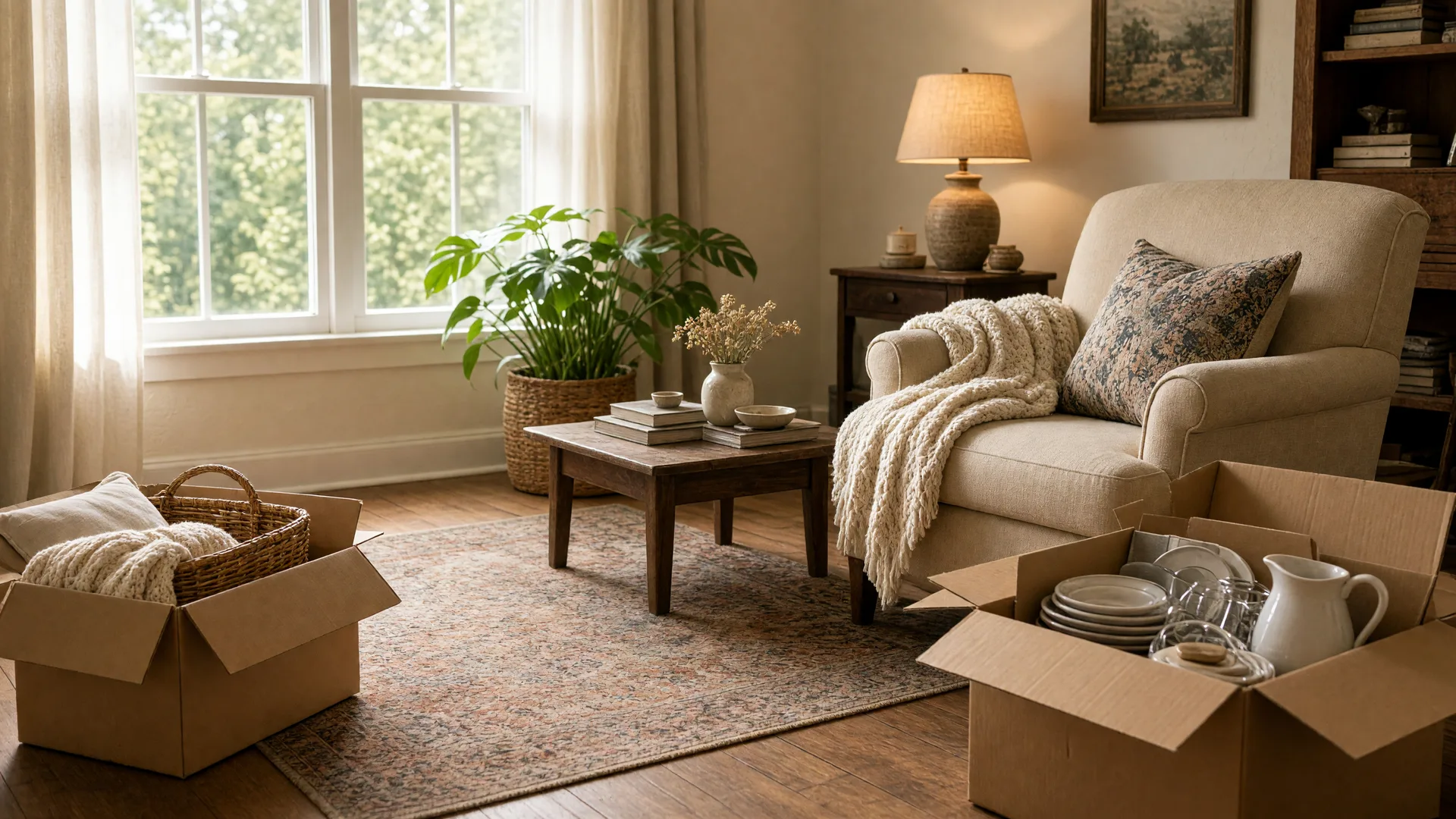
There comes a time when a home that once fit your family starts to fit
the size of the family you were, not the one you are.
Right sizing is about moving to the home that matches the life you are
living now, whether that means less square footage, fewer stairs, or
more of your time back in your own hands. This guide walks through when
it might be the right moment, what to keep, how to plan the move, and
how to get a clear picture of what your current home is worth, all
community-level and without pressure.
Four Sections·Practical Steps·No Pressure, No Listings
Right sizing is about keeping what you love and letting the rest go
Start Where You Are
Your Right Sizing, Step by Step
Right sizing is not one big decision. It is a series of small, buildable steps, and you do not have to take any of them until you are ready. Here is the path, in a sensible order.
How to Know When It is Time
There is no single calendar date when a home stops fitting. The
signs tend to arrive quietly, one room at a time. Pay attention to
any that keep showing up.
Rooms you no longer use
The spare bedrooms you dust rather than sleep in, the formal
dining room that held two family dinners last year, the
closets you step around to reach anything at the back. When
more of the house works for you than you work for, it may be
time to talk about size.
The maintenance keeps growing
Bigger homes come with bigger upkeep: a roof that spans more,
more exterior to paint, a yard that takes a full weekend.
When the to-do list gets longer and the joy of tackling it
gets shorter, right sizing can hand some of those hours back.
The stairs are part of the conversation
A one- or two-story home with the laundry upstairs can make
you think twice about every trip. Many neighbors who right
size choose a single-level layout, or a floor plan that
keeps the daily essentials on one floor.
Family needs have changed
Kids have grown and moved on, or you are welcoming grandkids
on visits, or loved ones are moving in or into closer
communities of care. The home that worked for one season of
family life is allowed to change with the next.
Finances are part of the picture too
Owning more home than you need can tie up money in upkeep,
utilities, and taxes that might serve you better elsewhere.
Right sizing is a way to free up dollars and simplify, for
now and for the years ahead.
What to Keep
This is the heart of right sizing, and the part people worry about
most. The good news: you do not have to part with everything, and
there is a clear way to decide. Sort room by room, and for each
item ask the same simple question, what would I move if I only had
a few boxes?
Keep what you actually use and love
The everyday dishes, the armchair you sit in, the photos and
keepsakes that make a house a home. If you have used it in
the last year and it earns its place, it gets a box.
Pass down the things that matter
The china, the tools, the handmade quilt, the recipe box.
Before you give anything away, ask your family who would
treasure it. A thing passed down to the right person travels
forward instead of gathering dust.
Sell the things with a second life
Furniture and tools in good shape can be sold to a neighbor,
at a local consignment shop, or through online marketplaces.
What you earn can gently fund the new chapter, and what you
learn about what people actually want can help too.
Donate what is still good, recycle the rest
Local charities and thrift stores are glad to take useful
clothing, books, and household goods. Toss or recycle the
broken and the outgrown. Every box you clear brings the
clutter down, and that is the whole point.
A gentle note on the sentimental
You do not have to do it all in one sitting. Keep a single box
of the keepsakes you cannot decide on yet, and come back to it
later. Sentimental items get easier to sort when you separate
the memory from the object, keep the memory, and let the right
object find a new home. Be easy on yourself; this gets lighter
the further in you are.
How to Plan a Move
A calm move is a planned move. Give yourself room to breathe, and
work the steps one at a time. A clear timeline is the difference
between a busy month and an overwhelming one.
01
Build your timeline backward
Pick your move-in date and work back from there. Allow
several weeks for sorting, a week or two for packing, and a
day or two for the move itself. Mark the dates on a calendar,
and build in margin for the things that always take longer
than you expect.
02
Sort first, pack second
Never pack the same bin twice. Go room by room, keep, donate,
sell, pass down, or toss. Once each room is sorted, the
packing is simply boxing the keep pile. Label every box by
room on the top and side.
03
Pack a first-night box
Set aside the things you need before you unpack everything:
medications, a change of clothes, toiletries, chargers, a
kettle or coffee maker, towels and bedding. Keep it in the
car with you so the first evening goes smoothly no matter
what.
04
Decide on movers early
If you are using professional movers, get quotes and lock in
your date well ahead, especially in a busy season. If you are
moving yourself, reserve a truck early and round up the
neighborly help, with lunch as the thank you.
05
Plan for utilities and forward your mail
Set up and cancel utilities with a start and end date, and
file a change of address with the post office. Handle it
while you still have mental energy, so moving day is about
the boxes, not the paperwork.
06
Settle in on purpose
Unpack the essentials first, make the beds, and take a real
pause. Find your new routines, meet a neighbor, and take a
walk around your new town. Johnston County is a place that
welcomes the settled quickly. The settling-in guide is here
when you want the full new-move rundown.
How to Understand What Your Home Is Worth
A home is worth what a ready buyer will pay for it, and that comes
down to a few things working together. It is worth demystifying,
because a clearer number makes an easier decision.
Comparable sales, the comps
The strongest signal is what similar homes nearby actually
sold for recently, not what they were listed for. Size, age,
layout, and neighborhood all come into the comparison.
Condition counts
Upkeep, updates, and overall condition move the number either
direction. Two homes of the same size can differ meaningfully
based on the roof, the kitchen, and the care that went into
the details.
The market around it
Demand in Johnston County, how long homes sit, and seasonal
patterns all shape what a buyer will pay and how quickly.
Value is not a fixed number; it moves with the local market.
For a Real Number, Ask a Local
Online estimates can be a helpful starting point, but they are
not the whole story. For a clear, personalized picture of what
your Johnston County home is worth today, Amy Stanley can put
together a free home value estimate for you, no strings
attached. It is a conversation, not a commitment.
The Next Step Is Just a Conversation
If any of this is starting to sound like you, the calmest way
forward is a no-pressure home visit. Amy will walk through your
home with you, listen to how you actually live in it, and share
honest, plain-English guidance about your options. No scripts, no
push, just a neighborly starting point for your next chapter.